Ceiling holes after changing downlights: how to plan the repair
A practical Perth guide to coordinating electrical work and ceiling repairs after downlights are moved, removed or replaced, including patch-versus-section factors and useful quote photos.
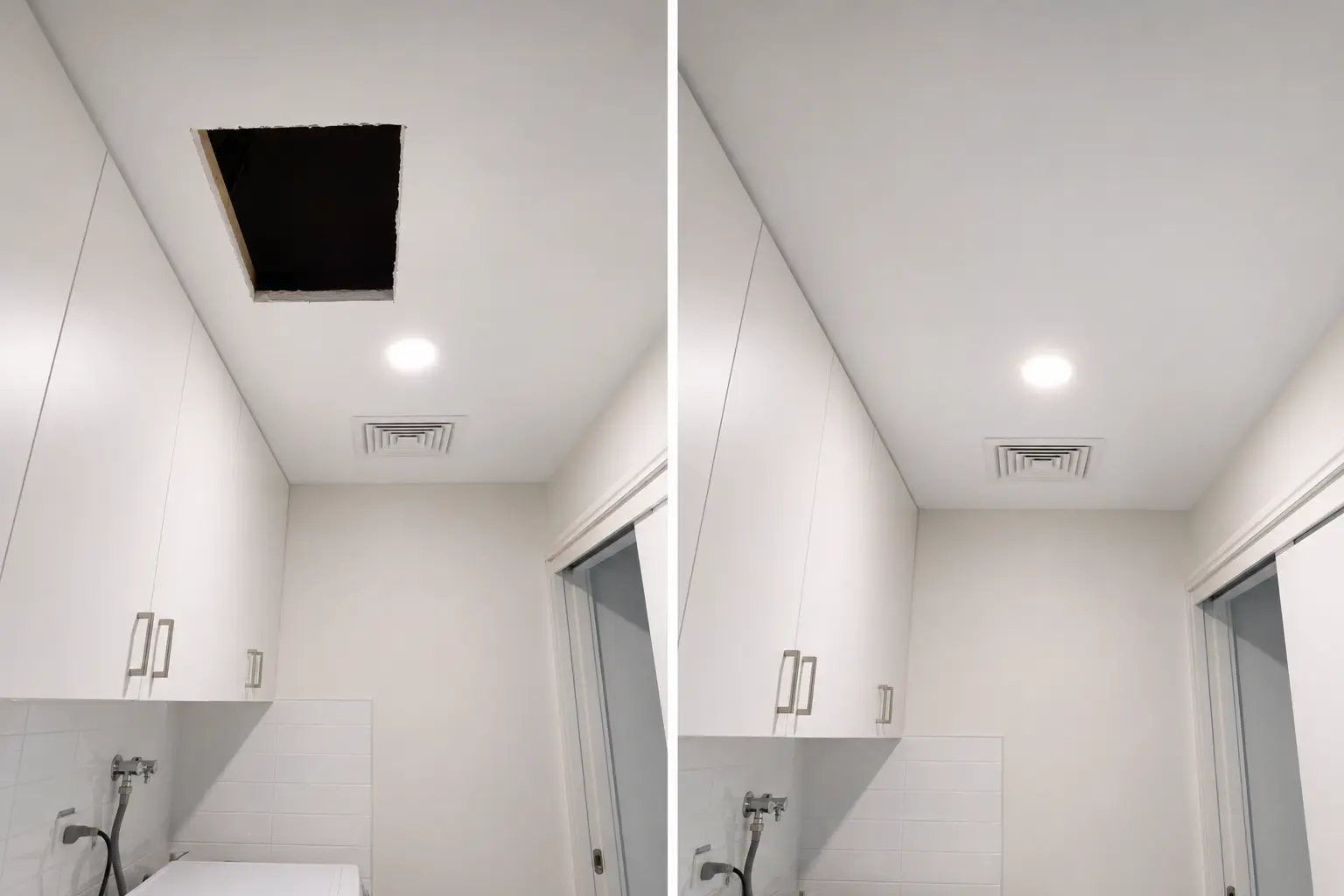
Changing recessed downlights can leave a ceiling with redundant circular holes, enlarged cut-outs or old fitting positions that no longer suit the new lighting layout. The electrical work and the ceiling repair are separate scopes, but the cleanest result usually comes from planning them together.
For Perth homeowners and property managers, the key questions are whether the electrical layout is final, whether the surrounding plasterboard is sound, and whether several openings can be repaired locally or require a broader section of ceiling work.
Confirm the electrical scope before repairing the ceiling
Moving, replacing or disconnecting fixed light fittings is electrical work. The Western Australian Government advises that electrical work must be completed by an appropriately licensed electrical contractor and warns against removing or replacing fittings yourself. See the WA Government guidance on having electrical work done.
Before the ceiling repair is finalised, confirm which downlights will remain, the final fitting positions and whether redundant fittings have been safely disconnected. CRP does not provide electrical work, and the ceiling-repair quote should not assume that electrical changes are included unless they are separately documented by the relevant contractor.
Identify the type and pattern of openings
A lighting change can leave several different ceiling conditions:
- an old circular cut-out after a downlight is removed;
- an opening enlarged for a previous fitting that is now too large;
- old and new holes positioned close together;
- several redundant openings across one room;
- rough or damaged plasterboard around the edge of a fitting; or
- an access opening created so another trade could reach services above the ceiling.
These conditions do not all lead to the same repair. A room-wide photograph and safe close-ups help show the number, spacing and location of the openings in relation to joints, cornices, vents and the new lighting layout.
What affects a patch-versus-section decision?
A contained opening may suit a local plasterboard patch when the surrounding lining is sound and the repair can be properly supported and finished. CRP’s guide to plaster and gyprock ceiling repairs explains why sound edges, stable backing and a realistic finishing plan matter.
A broader section may need assessment when several openings overlap, the remaining plasterboard between them is narrow or damaged, previous repairs are unstable, or a larger boundary would provide a more reliable finish. The position of existing joints and supports, access above the ceiling and the condition of nearby board can also change the scope. Read more about when section replacement may be considered.
Fire-rated, acoustic or other specified ceiling systems need particular care. The repair must preserve the required system rather than treating the opening as an ordinary cosmetic hole. Product manufacturers provide repair information for their own systems, but a generic product page cannot confirm the correct method for a particular property. The CSR Gyprock frequently asked questions are a useful starting reference, with the project-specific scope still needing assessment.
Agree the sequence between trades
There is no single sequence for every lighting change, but responsibilities should be clear before work starts. The electrical contractor should confirm the final fittings and electrical condition. The ceiling-repair scope can then address the redundant openings, damaged lining and agreed finish boundary without obstructing the new layout.
If new fittings are not yet installed, provide their intended positions and cut-out information to both contractors. If electrical work is complete, advise whether the fittings can remain in position during the ceiling work or need separate coordination. Avoid handling loose fittings or exposed wiring to obtain photographs.
Plan the finished surface, not only the hole
The visible result depends on more than filling an opening. Jointing compounds usually need to extend beyond the patch so the repair can be feathered into the surrounding surface. Raking daylight and downlights can make small ridges, texture differences and paint sheen changes more noticeable.
Confirm whether the quote includes sealing, painting and the extent of the painted boundary. Older paint may have faded or changed colour, so a small touch-up may remain visible even when the plaster repair is flat. CRP’s ceiling repair and paint-matching guide explains the factors to discuss before work begins.
What to send for a useful ceiling-repair quote
Provide enough context to understand the whole room as well as each opening:
- the Perth suburb and property type;
- the room and approximate ceiling height;
- a wide photograph showing the ceiling and lighting layout;
- safe close-ups of each redundant or enlarged opening;
- the approximate opening sizes and total number of holes;
- whether the electrical layout is final and the electrical work is complete;
- whether painting is required; and
- any access, occupancy or timing constraints.
See which photos help with a ceiling-repair quote. Do not reach into openings or remove fittings to take a better photograph.
Common questions
Can an old downlight hole be patched?
Often it can, provided the surrounding material is suitable and the patch can be supported and finished reliably. The number and spacing of openings may change the recommended boundary.
What if the old and new holes are close together?
The narrow section between openings may be difficult to treat as a sound repair base. An assessment can determine whether separate patches or a larger plasterboard section is more appropriate.
Is painting included?
Only when it is included in the written quote. Confirm preparation, sealing, number of coats and the painted boundary rather than assuming the repair will automatically include a full-ceiling repaint.
Can several rooms be included in one quote?
Yes. List the number of openings in each room and provide separate wide photographs so the repair and access requirements can be scoped clearly.
Request a ceiling-repair quote
If a lighting change has left redundant or enlarged openings, send CRP the property suburb, room-wide photos, safe close-ups, the number of holes and whether the electrical work is complete. Request a ceiling-repair quote and upload your ceiling photos. If you prefer to discuss the assessment first, contact CRP.